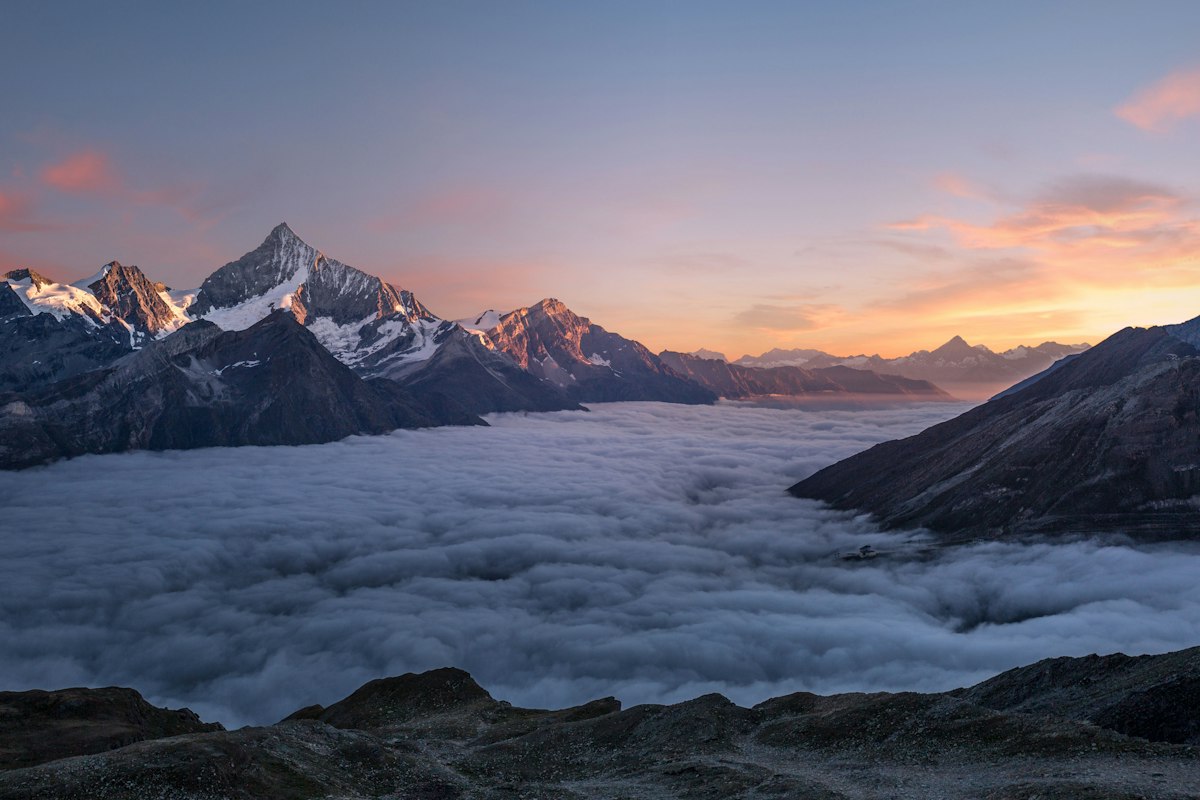
The Cascade Range contains some of the most spectacular alpine climbing in North America, but volcanic peaks present hazards that are categorically different from those on granite or ice-clad mountains. I've climbed extensively throughout the Cascades, and what initially attracted me to peaks like Rainier and Adams was their accessibility and grandeur — what kept me studying their specific hazards was the realization that a volcano is a living system, and even dormant volcanic peaks emit gases, harbor unstable terrain, and can shift from benign to dangerous with surprisingly little warning. Understanding volcanic hazards is not optional for Cascade climbers — it's essential.
Geothermal Hazards
Even on peaks considered dormant or inactive, geothermal activity persists. On Rainier's Ingraham Glacier direct route, climbers cross active steam vents near the summit dome. On Adams, the South Crest route passes through areas with visible sulfur deposits and intermittent steam emission. These aren't reliably marked, and visibility can reduce suddenly as you approach.
The hazards from geothermal areas include: burns from contact with hot ground or steam, structural instability from hydrothermally altered rock (weak, clay-rich rock that can fail without warning), sudden steam explosions that can discharge rocks and debris, and toxic gas concentrations in depressions and snow caves where gas can accumulate. On Rainier specifically, the summit dome is unstable — rockfall from the caldera rim occurs regularly, and climbing parties have been hit by falling debris.
Avoiding geothermal hazards requires checking current condition reports before any summit attempt, traveling through geothermal areas during the coldest part of the day (early morning) when steam production is minimized, staying on established routes where the terrain has been previously evaluated, and maintaining awareness of wind direction — toxic gases like hydrogen sulfide accumulate downwind of fumarole fields.
Crater Rim Routes and Summit Domes
The crater rim on Cascade volcanoes is not a stable environment. The rim itself is composed of loose, friable rock that has been blasted and weathered into unstable configurations. On Rainier, the true summit is on the rim — the caldera floor is lower, and the rim is a narrow, exposed crest with significant exposure on both sides.
Route-finding on crater rims requires constant attention. The rim can look like solid rock but may be a thin shell over void. I always test suspect-looking sections with my pole before committing weight, and I avoid any section where the rock feels hollow or flexes underfoot. Cornices on the rim can extend 5-10 meters beyond the actual edge of the caldera and may not be distinguishable as cornices from above — they look like normal snow accumulation until you get too close.
On Shasta, the Hotlum-Wintun route ascends through a geothermal area on the upper mountain where route-finding requires navigation around steam vents and through unstable volcanic debris. This route is not recommended in poor visibility due to the difficulty of identifying the safe passage through the geothermal hazard zone.
Ash Advisories and Volcanic Ash Hazards
When Cascade volcanoes are active, ash becomes a climbing hazard even on peaks far from the eruption source. Fine volcanic ash is respirable crystalline silica — significantly more dangerous than ordinary dust. Ashfall makes route-finding difficult, creates abrasive conditions for gear and skin, and can cause respiratory distress at altitude even in small concentrations.
Current volcanic activity status for the Cascades is monitored by the USGS Volcano Hazards Program, and advisories are issued through the National Weather Service. Before any climb in the Cascades, check current volcanic activity status. If an advisory is in effect for your target peak, reconsider your plans. If you're caught in unexpected ashfall, protect your airways immediately (buff or mask), minimize exposure by descending, and avoid contact with ash on skin and eyes.
Altitude and Gas Risk Combination
Cascade volcanoes are high enough (Rainier 4,392m, Shasta 4,322m, Adams 3,743m) to create genuine altitude-related physiological stress, but not high enough that climbers typically treat them as high-altitude objectives. This creates a dangerous complacency — climbers push through AMS symptoms that they'd never ignore on a Himalayan climb.
At these moderate altitudes, proper acclimatization is still beneficial. Spending a night at Paradise (1,650m on Rainier) before a summit attempt, rather than driving up and immediately starting, reduces altitude stress meaningfully. On the volcano itself, altitude interacts with gas exposure — both are respiratory stressors, and the combination can produce symptoms that mimic or exacerbate each other.
Weather Specificity in the Cascades
The Cascades are among the most weather-dynamic climbing environments in the world. The range sits at the intersection of Pacific maritime weather systems and continental air masses, creating conditions that can shift from clear and mild to whiteout with freezing temperatures within hours. Weather forecasting for the Cascades requires region-specific predictions — general forecasts for the broader region are unreliable. Use mountain-specific weather services that provide elevation-specific forecasts for your target peak. Our Weather Forecasting for Climbers guide covers the specific interpretation skills you need.
Related Articles
- Weather Forecasting for Climbers — Reading forecasts specific to mountain environments
- Planning Your First Expedition — Expedition framework for Cascade objectives
- Avalanche Awareness Guide — Snow hazards on volcanic terrain