Before attempting any significant alpine objective, you should have a clear, honest picture of your current fitness level. I've seen strong hikers fail on moderate alpine routes because they had raw endurance but no upper body strength for roped terrain. I've watched trail runners with exceptional cardio get slowed to a crawl by steep snow because their leg strength couldn't handle the sustained elevation gain with a heavy pack. Fitness for mountaineering is sport-specific, and testing it before you're committed to an objective is far better than discovering your weaknesses at 4,000 meters.
The Cooper Test: Measuring Aerobic Capacity
The Cooper test (12-minute run) is one of the most validated field tests for aerobic capacity. The goal is to cover the maximum distance you can in 12 minutes of running. The results correlate well with VO2 max, which is the primary measure of aerobic fitness and the physiological foundation for sustained climbing performance at altitude.
A score of 2,400 meters in 12 minutes represents an "average" adult male fitness level. For serious alpine climbing, you should be targeting 2,800-3,000 meters or higher. Women typically score 10-15% lower, so adjust accordingly — a 2,500m Cooper score for a woman represents excellent aerobic fitness. For reference, elite mountaineers and ultra-runners regularly score above 3,200 meters.
To conduct the test: find a flat, measured track or use a GPS-verified route. Warm up for 10-15 minutes with light jogging and dynamic stretching. Run at a pace you can maintain — this is not a sprint. Record the total distance covered in 12 minutes. The test is more reliable when repeated on multiple occasions to account for day-to-day variation.
Step Test: Simulating Mountain Climbing Load
Aerobic capacity in isolation doesn't tell the whole story for mountaineering. The step test simulates the sustained, rhythmic effort of ascending steep terrain under load. Use a 30-40cm step (a sturdy bench or fixed object). Step up with one foot, bring the second foot to full standing position on the step, then step down in reverse order. Maintain a cadence of 30 steps per minute (up with one foot counts as one step) for a total of 5 minutes.
Your heart rate should be measured immediately at the end of the 5-minute block and again after 1 minute of rest. A well-trained climber's heart rate will recover quickly — dropping by at least 20-30 beats per minute in the first minute after stopping. If your heart rate remains elevated (above 120 bpm) after a full minute of rest, your aerobic fitness needs more development for sustained alpine work.
The step test also reveals leg strength endurance. If your quads are burning and trembling by minute 4, you'll struggle with sustained steep terrain. This test is particularly useful for identifying weakness in descending — many strong hikers fatigue rapidly on the downslope because they haven't specifically trained eccentric leg strength for descent.
Strength Tests
Mountaineering requires functional strength, not necessarily maximal strength. The following tests target the specific strength domains most relevant to climbing performance.
Pull-Ups
For alpine climbing, the ability to do multiple controlled pull-ups with your full body weight is essential — pulling yourself over a rock band, progressing along a horizontal traverse, or escaping a crevasse all require pulling strength. Target: 10-15 strict, full-range pull-ups for men, 5-10 for women. If you can do 15+ pull-ups easily, you're likely limited by aerobic capacity rather than pulling strength.
Test protocol: Hang from a bar with arms fully extended (dead hang), pull up until your chin clears the bar, lower back to dead hang with controlled descent. No kipping, no explosive movement. Count total clean repetitions. If you can't do at least 5 pull-ups, you have a significant pulling strength deficit that should be addressed before attempting technical alpine routes.
Push-Ups
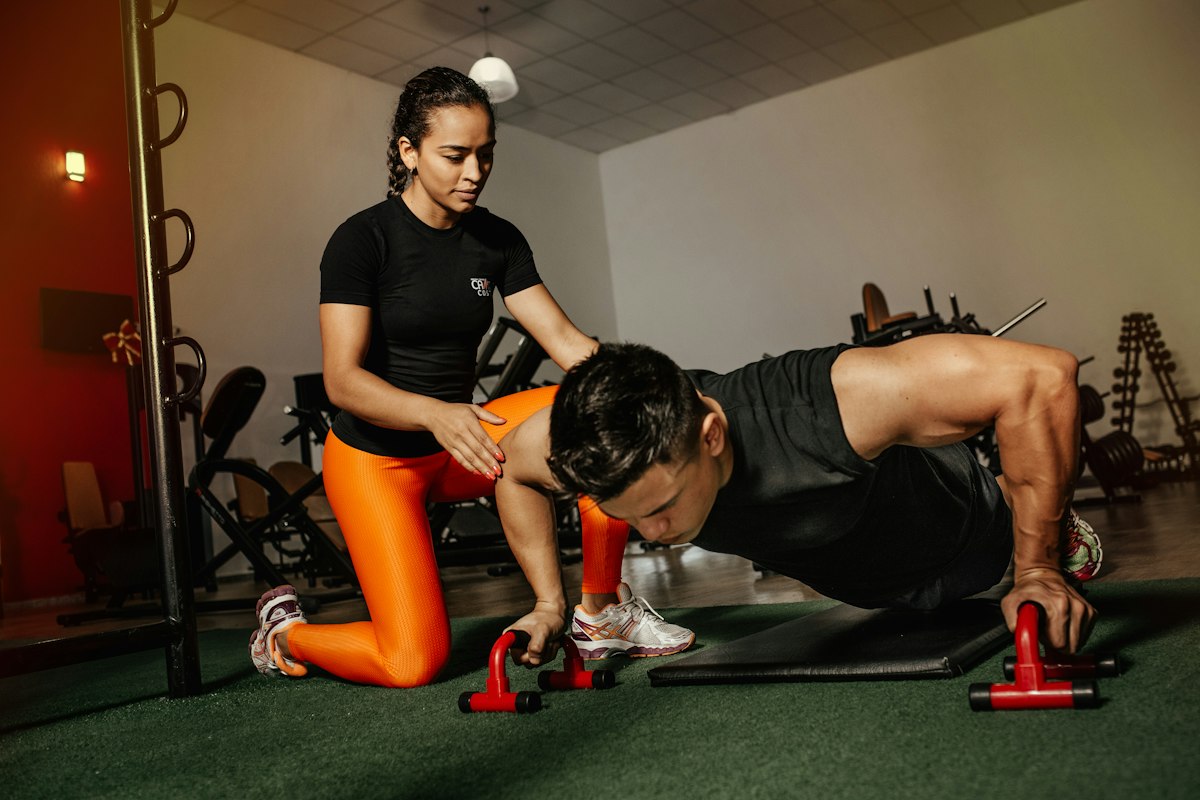
Upper body pushing strength matters less in mountaineering than pulling, but core bracing and shoulder stability during rappels and crevasse rescue require adequate pushing strength. Target: 30-40 push-ups in good form for men, 15-20 for women. Full range of motion — chest touching or approaching the ground — with a tight core and no sagging hips.
Plank Hold
The plank is the most practical field test for core stability, which transfers directly to everything from maintaining balance on steep snow to effective rope work. Target: 2-3 minute plank hold for men, 90 seconds to 2 minutes for women. The plank should be performed with a straight body line from head to heels — no sag, no pike, no elevated hips. If your core fails before 90 seconds, your rope work and technical climbing will suffer on long routes.
Wall Sit
Leg endurance under load is perhaps the most practically relevant strength quality for mountaineering. The wall sit simulates standing on a steep slope for extended periods. Sit with your back against a wall, thighs parallel to the ground (knees at 90 degrees), arms crossed over chest. Hold for 2 minutes. If your legs are trembling and burning after 60 seconds, your descending strength endurance is likely inadequate for multi-hour steep terrain.
Flexibility and Mobility
Flexibility is often the most neglected component of climbing fitness, yet it has direct safety implications. Hip flexibility affects your ability to kick steps efficiently in steep snow — a limited hip extension forces you into an awkward, energy-inefficient stride. Ankle dorsiflexion flexibility matters for crampon technique on steep terrain. Shoulder mobility affects your ability to place protection, chop steps, and manage a rope overhead.
Quick flexibility screen: Sit with your back against a wall and both legs extended straight in front of you. If you can't get your torso within 30cm of your legs with a flat back, you have a meaningful hamstring flexibility deficit. For the ankle, kneel with your foot flat on the ground and lean forward — you should be able to get your knee past your toes without your heel lifting. For the hips, try a deep bodyweight squat with feet flat — if you can't reach the bottom position without your heels lifting or falling backward, work on hip mobility before your climb.
Assessing Your Readiness
No single test defines your climbing readiness. A climber with excellent aerobic capacity but poor strength will fatigue quickly on technical terrain. A climber with great strength but poor endurance will struggle on long routes. The ideal assessment considers all domains together. For a comprehensive training program that addresses identified weaknesses, see our Physical Training for Climbing guide.
Related Articles
- Physical Training for Climbing — Build a comprehensive training program
- Training Fitness Calculator — Track your fitness metrics over time
- Winter Summit Preparation — Understanding the fitness demands of winter objectives